
Service Blueprint Feedback
A detailed end‑to‑end blueprint that clarifies caller behavior, system logic, and operational gaps across government voice channels.
Overview
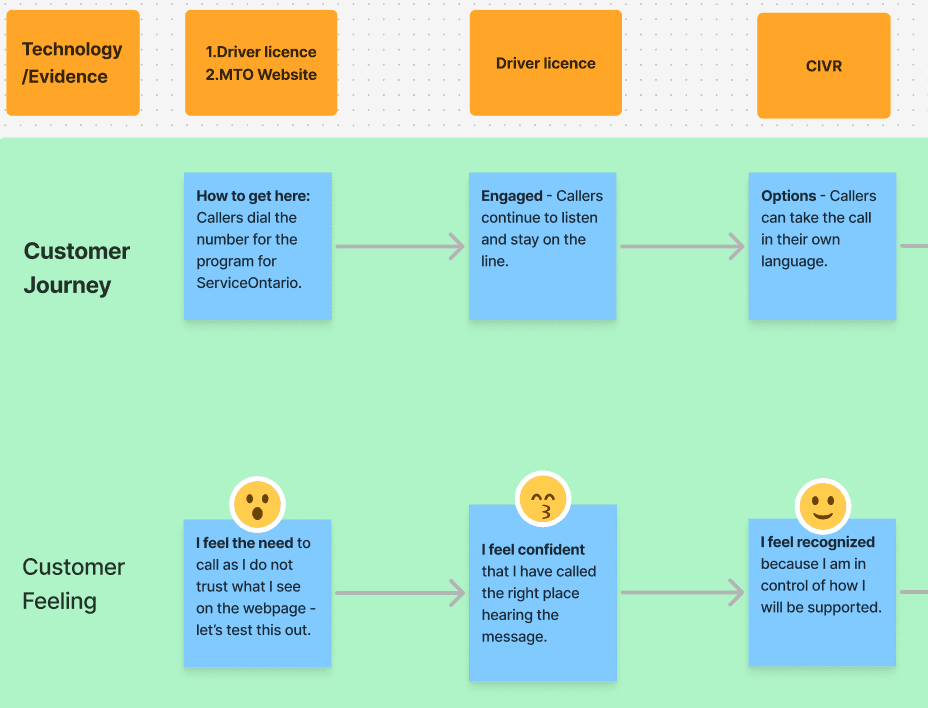
This project focused on redesigning and documenting the complete caller experience for ServiceOntario’s driver’s license renewal process. Using FigJam as the primary mapping tool, I analyzed how citizens navigate automated voice systems, multilingual options, agent handoffs, video chat escalation, and post-call surveys. The goal was to uncover friction points, improve clarity across the journey, and align operational workflows with real user needs. The work combined service design, systems thinking, and cross-functional collaboration to create a unified understanding of the voice-based support experience.
Problem
Citizens calling ServiceOntario often struggled with: • Unclear prompts and decision points • Confusing transitions between IVR, CIVR, and live agents • Language barriers and accessibility gaps • Inconsistent messaging across channels • Lack of trust or confidence in automated systems These issues increased call duration, reduced completion rates, and created unnecessary strain on support agents. The absence of a unified blueprint made it difficult for teams to diagnose problems or improve the experience.
Users and Personas
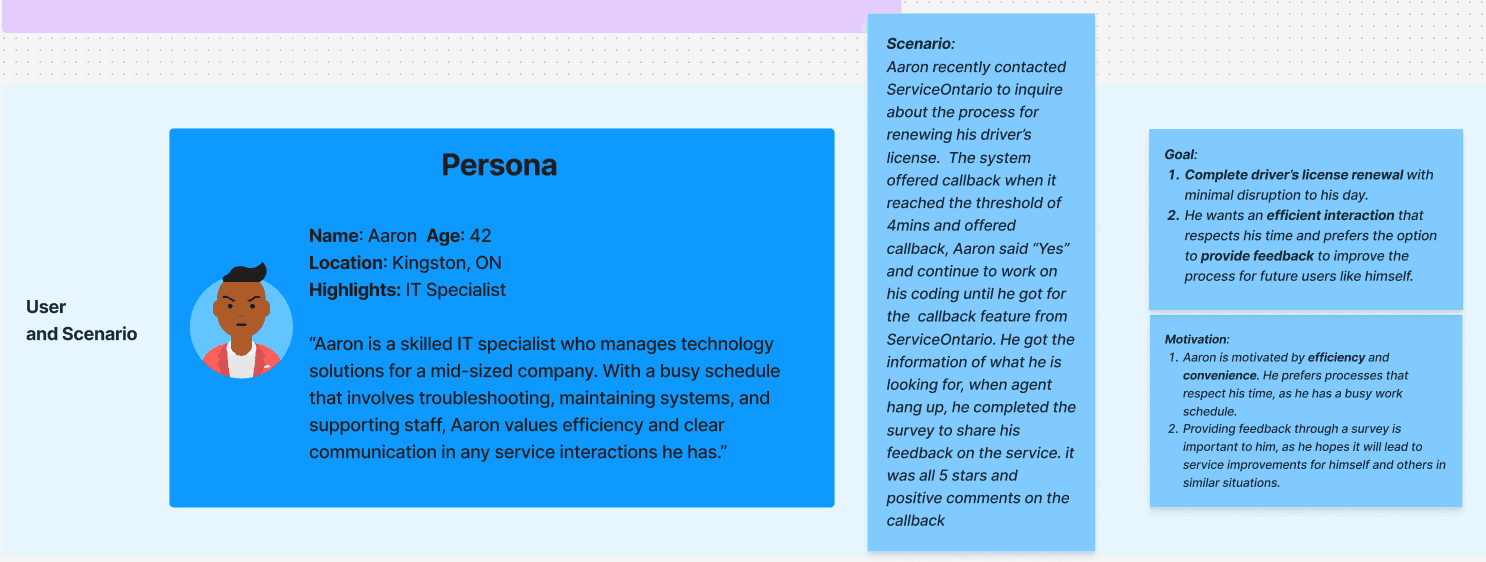
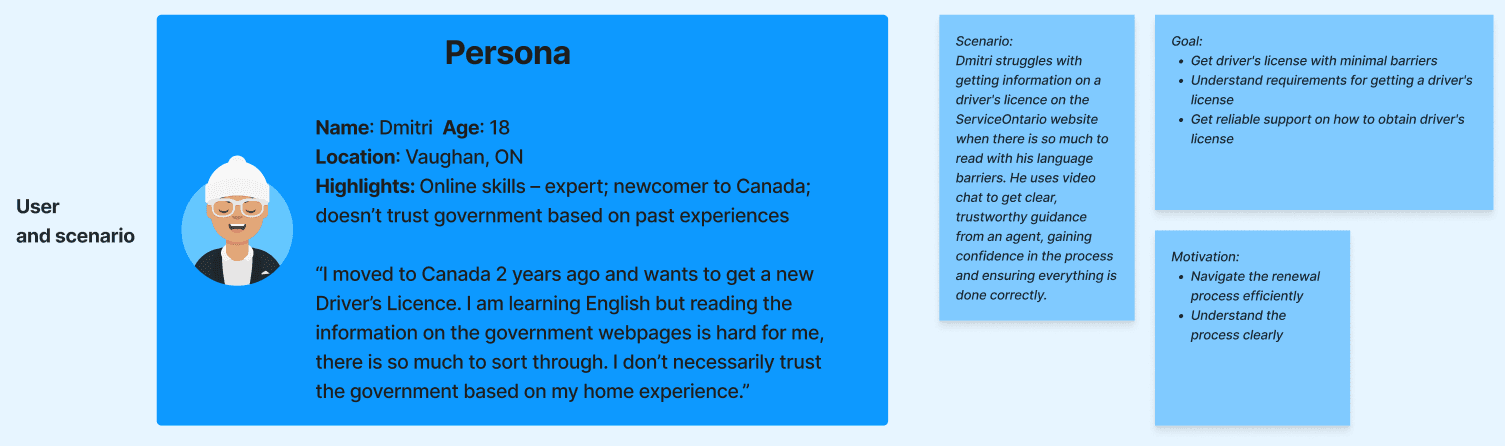
To ground the blueprint in real user behavior, I created three personas representing distinct caller types and escalation paths:
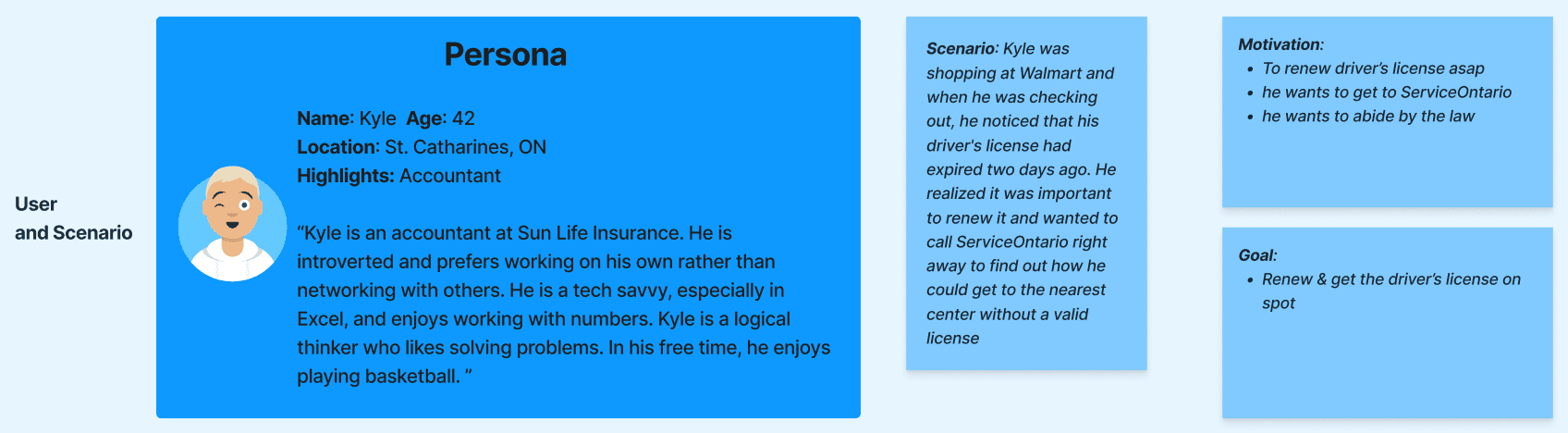
Kyle - IVR Journey
Tech-savvy but introverted accountant
Discovered his expired license while shopping
Motivated by urgency and legal compliance
Mapped to the initial IVR experience and agent escalation
Aaron - CIVR Callback and Survey Flow
Busy IT specialist with high expectations for efficiency
Accepted callback after 4-minute threshold
Completed the survey with positive feedback
Mapped to the callback logic, agent handoff, and post-call survey
Dmitri - Video Chat Experience
Newcomer to Canada with language barriers and low trust in government systems
Used video chat to get clear, visual guidance
Gained confidence through face-to-face interaction
Mapped to the video escalation flow and accessibility support
These personas helped visualize emotional states, decision points, and system dependencies across different entry points.
My Role
I served as the Experience Designer responsible for:
Mapping the end-to-end caller journey
Creating service blueprints, journey maps, and emotional state diagrams
Documenting system dependencies, routing logic, and decision points
Validating workflows with operations, supervisors, and technical partners
Identifying opportunities to improve clarity, accessibility, and efficiency
Constraints
Legacy IVR and CIVR systems with limited flexibility
AWS routing logic that dictated how calls moved between systems
Multilingual requirements across English, French, and additional languages
Strict government accessibility and compliance standards
Operational constraints such as agent availability and call center capacity
These constraints shaped how the experience could be improved and documented.
Process
Blueprinting the Current State
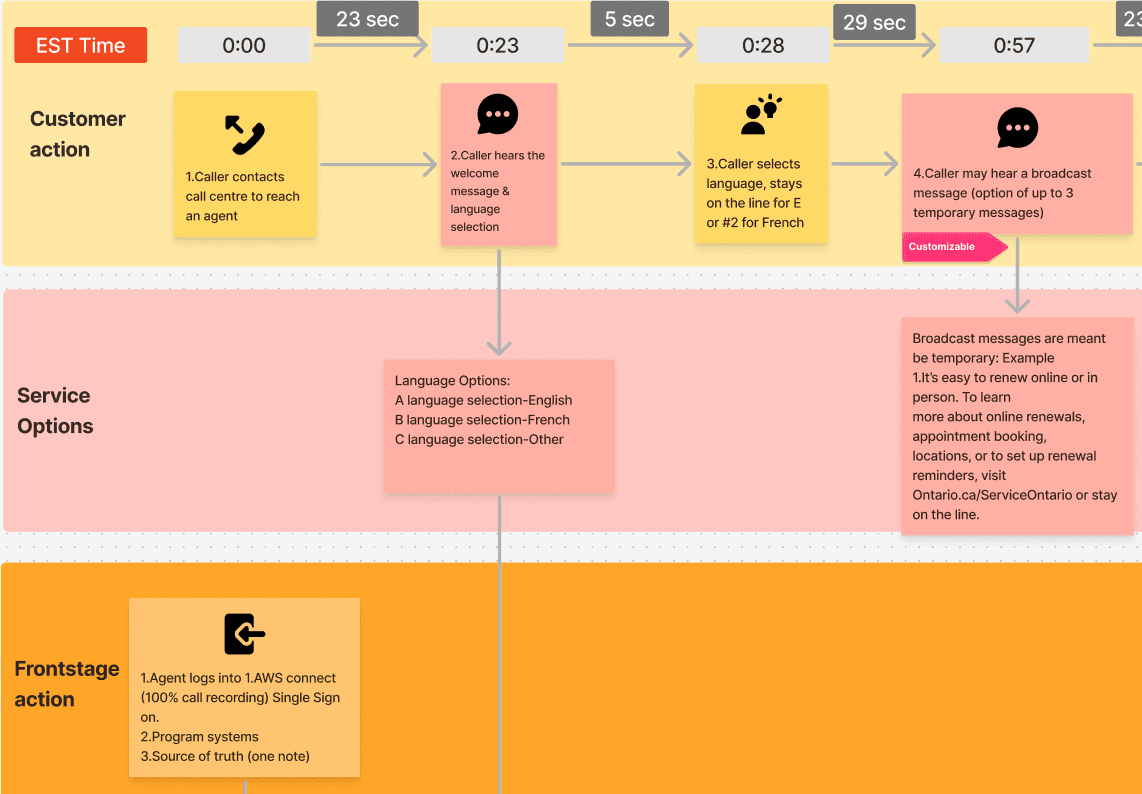
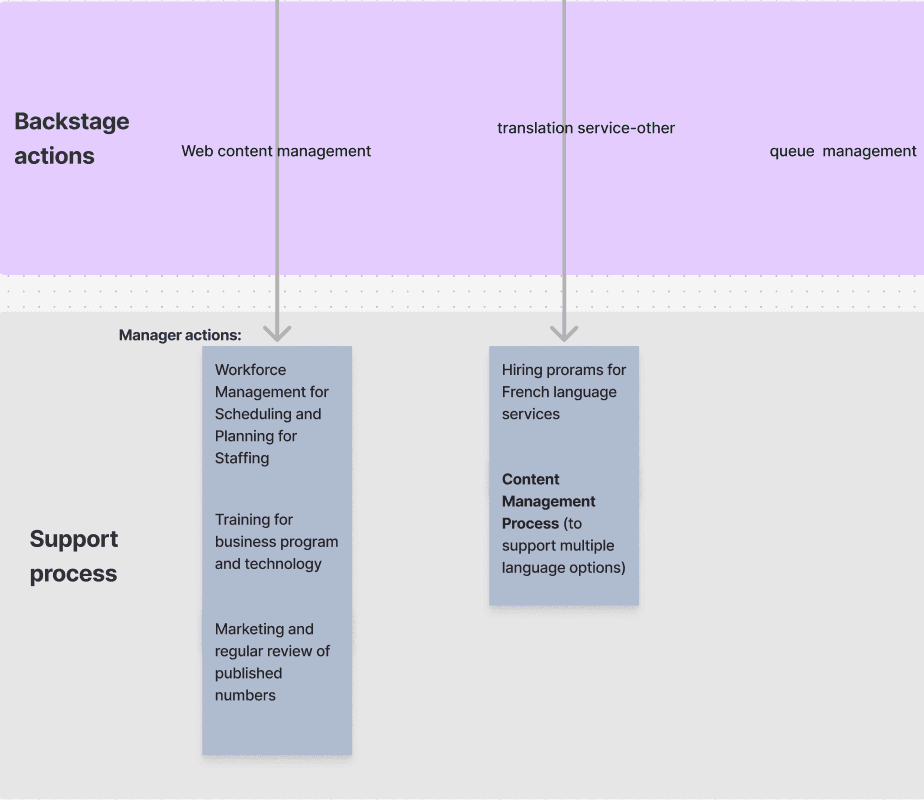
I created detailed service blueprints grounded in real user scenarios and call data. Each blueprint mapped:
Customer actions, expectations, and emotional states
Technology touchpoints (IVR, CIVR, AWS routing)
Service options, agent interactions, and escalation paths
Timestamps, decision points, and system dependencies
Supporting Artifacts
To complement the blueprint, I produced:
Persona-driven journey maps
Emotional state diagrams
End-to-end service blueprint timelines
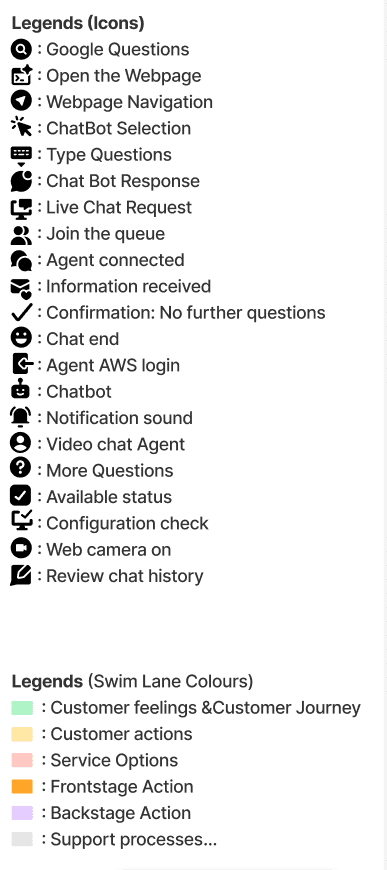
Icon legends, swim lane keys, and standardized notation
These artifacts helped visualize how users moved through the system and where breakdowns occurred.
Cross-Functional Validation
I validated the diagrams with:
Operational teams
Call center supervisors
Technical partners
This collaborative review surfaced gaps between intended and actual behavior, informing targeted improvements to both the voice system and agent processes.
Solution
The combined blueprint revealed several opportunities to improve the caller experience and reduce operational strain.
Key Improvements
Simplified language selection and broadcast messaging
Clearer guidance around renewal deadlines and required documents
Improved callback and survey opt-in flows
Restructured decision points and system prompts
Strengthened emotional confidence through predictable transitions
Outcome
The final deliverables aligned design, operations, and technical teams around a shared, evidence-based understanding of the ServiceOntario call experience. These insights informed future improvements to accessibility, multilingual support, and overall citizen satisfaction across voice-based channels. The work established a scalable foundation for ongoing service enhancements and set a new standard for documenting complex IVR-driven journeys.
What I Learned
This project reinforced the importance of service design in large-scale government systems. Mapping the full ecosystem revealed how technical constraints, operational workflows, and emotional user needs intersect. Clear documentation, cross-functional alignment, and systems thinking are essential for improving complex voice-based experiences.